Neuromind Pro Official Website › Blog › Huperzine-A
Huperzine-A Is Not Like Anything Else On This Label
Nine of the ten things named on this panel are vitamins, an amino acid, or extracts of plants and beans. The tenth blocks an enzyme, works in micrograms, and shares a mechanism with a class of prescription medicine.
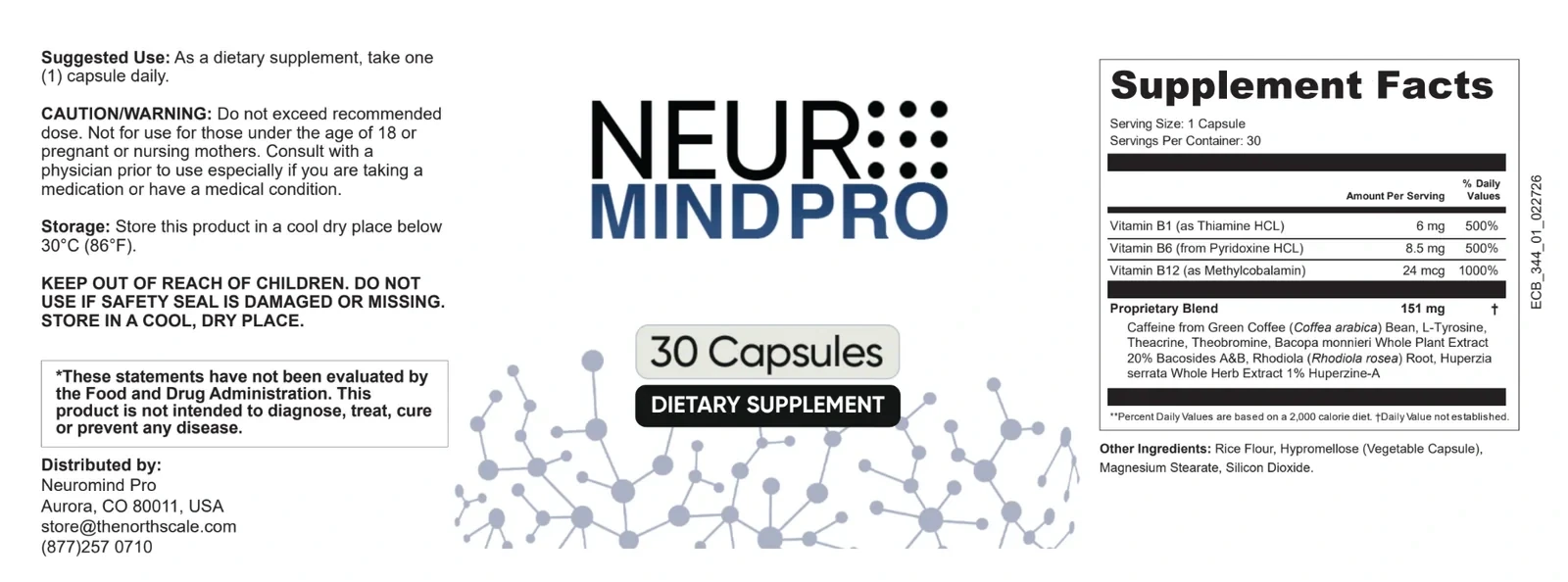
- Huperzine-A is a single alkaloid isolated from Huperzia serrata, a clubmoss. The panel prints the extract as standardised to 1% of it.
- It is a reversible acetylcholinesterase inhibitor. Donepezil, rivastigmine and galantamine act on the same enzyme.
- Its published trials ran at 0.4 to 0.8 mg a day, which is under one per cent of the 151 mg the blend holds.
- It is the only one of the seven blend ingredients whose studied amount fits inside that total without straining the arithmetic.
- Its own efficacy record is thinner than its reputation, and the amount in this capsule is covered by the blend line rather than printed.
What huperzine-A is, and what a 1% extract means
Huperzia serrata is a clubmoss rather than a herb in the kitchen sense, and the whole plant has a long history of use in Chinese medicine. Huperzine-A is one alkaloid taken out of it and concentrated. The two are not interchangeable, and the panel is specific about which of them is in the capsule: Huperzia serrata whole herb extract, standardised to 1% huperzine-A.
That percentage is doing real work. A row carrying only a plant name leaves the strength of the material open, because two extracts of the same herb can differ tenfold. A standardisation figure fixes the ratio between extract and compound.
Why the standardisation is the useful half of that row
One hundredth is an easy ratio to carry around. Forty milligrams of a 1% extract carries 0.4 mg of huperzine-A; eighty milligrams carries 0.8 mg. Those two numbers happen to be the ends of the range the human studies used, which is why this row rewards a closer look than any of the six above it.
The bacopa row is standardised the same way, to 20% bacosides. The difference is the target: its trials ran at 300 mg of extract a day, which has nowhere to sit inside a 151 mg total.
The mechanism that separates it from the other nine rows
Acetylcholine is a neurotransmitter, and acetylcholinesterase is the enzyme that clears it out of the synapse once it has done its job. Huperzine-A binds to that enzyme and slows the clearing, so the transmitter lingers. The binding is reversible, which means the effect fades as the compound leaves the body.
None of that is a nutritional mechanism. Thiamine, vitamin B6 and vitamin B12 are cofactors in reactions the body runs anyway. Caffeine occupies adenosine receptors. Huperzine-A inhibits an enzyme, which is the kind of thing a medicine does.
The company this mechanism keeps
Donepezil, rivastigmine and galantamine are prescription treatments for Alzheimer's disease, and all three work by inhibiting acetylcholinesterase. Naming them is not a claim that a dietary supplement is equivalent to any of them, and it is not a claim about what this capsule does. It is a statement about mechanism class, and it is what makes the amount here worth thinking about at all.
A pharmacokinetic and tolerability study in healthy male volunteers followed oral huperzine-A through three formulations at a single dose — the crossover study is about handling rather than benefit, and it confirms the plain point that this is a compound with measurable blood levels rather than a food.
0.4 to 0.8 mg against a 151 mg ceiling
Seven ingredients share one printed total of 151 mg. A shared total is a ceiling rather than a recipe: no single one of the seven can exceed it, and six have to come in below. Setting each against the dose its own research used turns that into a column you can read down.
| Blend ingredient | What its own trials used | Share of the 151 mg line that would take |
|---|---|---|
| Huperzine-A | 0.4–0.8 mg a day | Under 1% |
| Theacrine | 125–400 mg a day | 83–265% |
| Bacopa monnieri extract | 300 mg a day | 199% |
| Theobromine | 250–1,000 mg a dose | 166–662% |
| Caffeine | Alertness strongest above ~200 mg | 132% and up |
| Rhodiola rosea extract | 400–576 mg a day | 265–381% |
| L-Tyrosine | 2 g a day, or 150 mg/kg | 1,325% and up |
The right-hand column is what one ingredient would need if the other six took nothing at all. Seven share 151 mg, so every figure above 100% is arithmetically out of reach.
Six of the seven would need more than the entire line to reach the amount their trials ran at, and L-tyrosine would need thirteen of them. Huperzine-A needs about half of one per cent.
That is the argument in a single line. The ingredient with the best claim to being present at a researched amount is also the only one on this panel that inhibits an enzyme. Everything else in the blend is plausibly present and implausibly sufficient, which the ingredients page works through row by row.
What a 1% extract would actually deliver
The exact extract weight sits inside the blend, so the sensible move is to draw the range instead of guessing a figure. Because the standardisation is printed, that range is easy to draw.
| If the extract weighs | Huperzine-A that delivers | Against the 0.4–0.8 mg range |
|---|---|---|
| 5 mg | 0.05 mg | An eighth of the lowest trial dose |
| 20 mg | 0.2 mg | Half of the lowest trial dose |
| 40 mg | 0.4 mg | The bottom of the range exactly |
| 80 mg | 0.8 mg | The top of the range exactly |
| 151 mg, the whole line | 1.51 mg | Nearly twice the top of the range |
Arithmetic on the label's own 1% standardisation. The extract weight sits inside the blend total, so these rows draw the range rather than describe this bottle.
Two things follow from those five rows. Even a modest slice of the blend puts this ingredient within reach of the doses the literature used, and the whole line would put it at roughly twice the top of that range. Neither end is likely. Both are arithmetically available, which is not true of anything else in the list.
It also explains why the last position in the blend is not the dismissal it looks like. Being the smallest share of a small total is a serious limitation for bacopa, where the target is hundreds of milligrams. For a compound studied in micrograms it is simply where the weight falls.
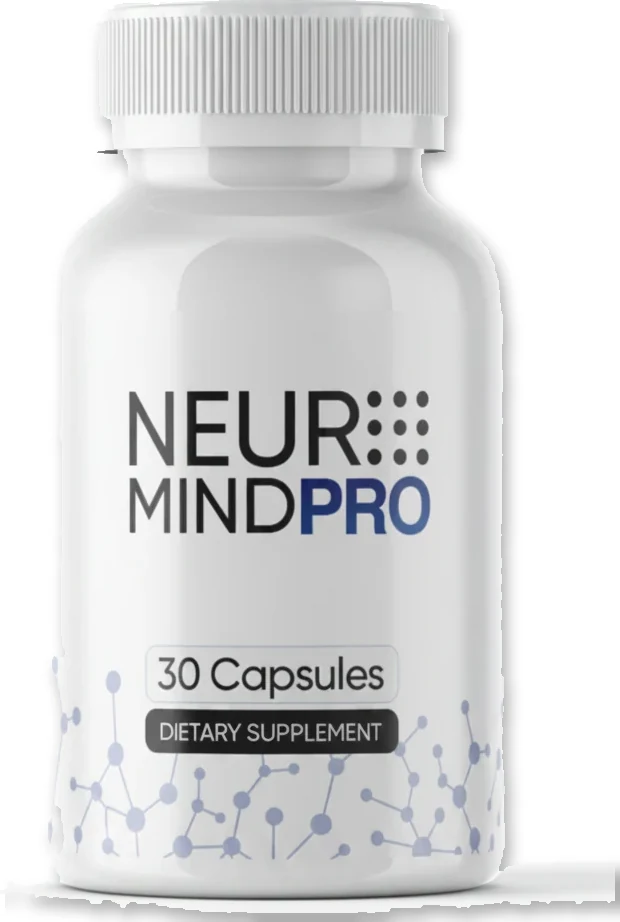
See the Neuromind Pro panel and the three packs
The three vitamins are printed with their amounts and the blend line is reproduced in full. One capsule a day, 30 to a bottle, with 60 days from purchase to change your mind.
Packs from $158 · six bottles for $294 · 60-day money-back guarantee
Order Neuromind Pro On The Official WebsiteOne capsule a day · 30 per bottle · lot NEU-26/GE-6907
What the trials measured, and what they did not
The reputation runs well ahead of the record, and the honest version is short. The best-conducted Western trial gave 200 micrograms twice daily for sixteen weeks to people with mild to moderate Alzheimer's disease, and the primary cognitive outcome did not move.
Cochrane reviewed the trial literature and judged the evidence inadequate to support a recommendation, while noting that the compound is pharmacologically active in microgram amounts. A later meta-analysis pooled a wider set of trials and flagged a high risk of bias across most of them, which is the reason pooled results in this literature should be read with the method section open.
Wider still, a review of 103 memory supplements sold in United States pharmacies found the distance between what these products imply and what the evidence carries to be the category norm.
What survives all of that is a short list, and it is worth keeping:
- The mechanism is real and well characterised. Nobody argues about what the compound does to the enzyme.
- The clinical benefit in the populations studied is unproven rather than disproven, and trial quality is the main reason for the verdict.
- None of that work was done in healthy adults who want sharper afternoons, which is who buys a capsule like this one.
- The studied range is 0.4 to 0.8 mg a day. It is the only number anyone can hold a label against.
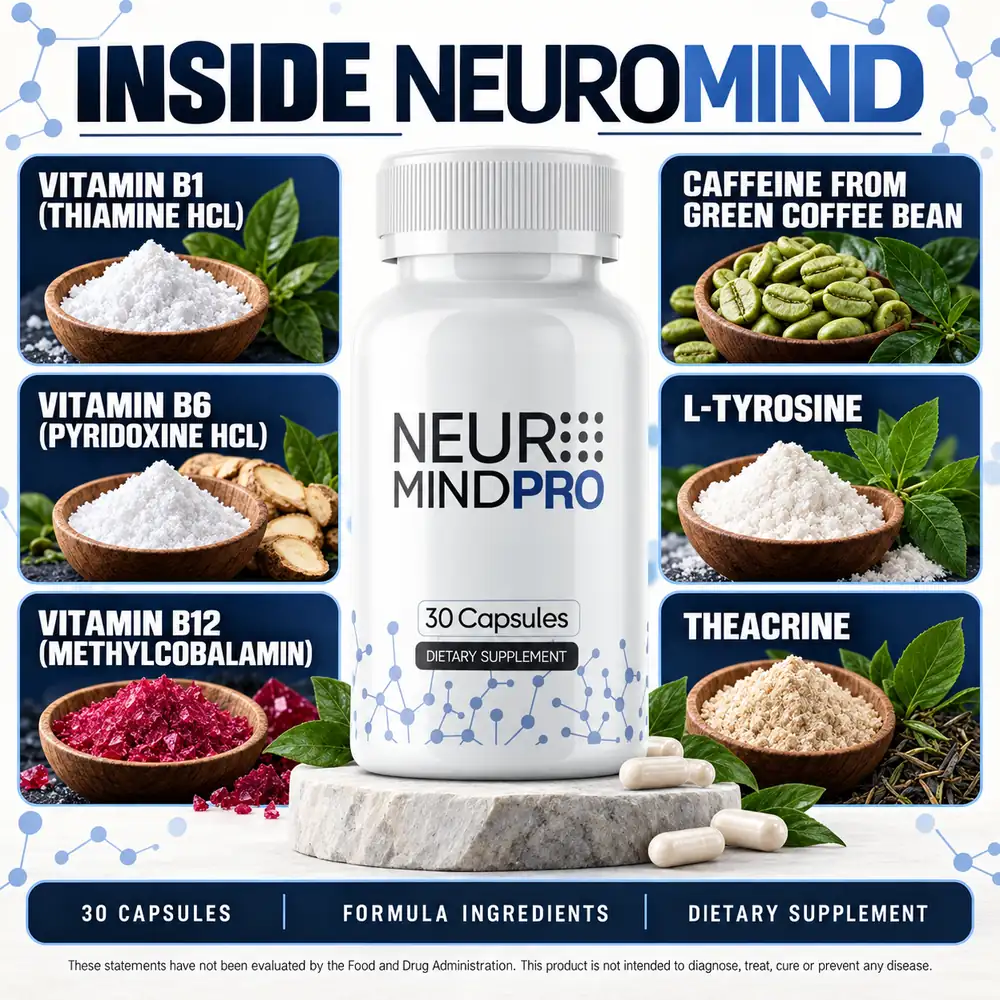
How this changes the way the rest of the panel reads
The top three rows are printed in full: thiamine 6 mg, vitamin B6 8.5 mg, vitamin B12 24 micrograms. Whatever else this label does, it does not obscure those, and the panel is reproduced row by row so you can hold the page against the bottle.
The blend asks for a different reading. For caffeine, theacrine, theobromine, bacopa, rhodiola and tyrosine, the ceiling tells you the realistic maximum, and the realistic maximum lands below the dose their studies used. For huperzine-A the ceiling puts no useful restriction on anything, because the studied dose was never going to be the binding constraint.
So the question flips halfway down the list. For six ingredients it is whether there is enough; for the seventh it is how much. Anyone weighing the packs on the pricing page is weighing that difference.
The conversation worth having before the first capsule
One interaction here is specific enough to name rather than hedge. If you already take a cholinesterase inhibitor on prescription, adding a second compound that acts on the same enzyme is a pharmacological question and not a dietary one.
Neuromind Pro is a dietary supplement for healthy adults 18 and over. It is not a drug, it is not FDA-approved, and it is not intended to diagnose, treat, cure or prevent any disease, including any memory condition. Huperzine-A works on the same enzyme as donepezil, rivastigmine and galantamine, so if you are prescribed one of those, take an anticholinergic, or have a heart-rhythm condition, asthma or a seizure disorder, take the label to your prescriber before you start.
The same caution reaches a few situations that are easy to forget:
- An anticholinergic medicine, which pushes the same system in the opposite direction.
- A medicine that slows the heart rate, or a diagnosed heart-rhythm condition.
- Asthma, or a seizure disorder.
- Surgery with a general anaesthetic coming up, because cholinesterase matters to how some anaesthetic agents are handled.
- Pregnancy, nursing, or any age under 18, which the label rules out on its own.
The bottle's own wording covers the general case: “Do not exceed recommended dose. Not for use for those under the age of 18 or pregnant or nursing mothers. Consult with a physician prior to use especially if you are taking a medication or have a medical condition.” Everything gathered in one place sits on the side effects page.
Two claims that do not follow from any of this
The first is that the capsule treats something. It does not, and no dietary supplement may say otherwise. This label makes one claim — designed to support cognitive function and mental clarity — and sharing a mechanism class with a prescription medicine is not a licence to go past it.
The second is that a microgram-scale enzyme inhibitor in an unstated amount is automatically alarming. Plenty of ordinary foods carry pharmacologically interesting compounds. The accurate summary is narrower: this is the one row on the panel where the amount would change the answer.
Knowing that before the first capsule beats finding it out after the third bottle. The guarantee page covers the 60-day window, the reviews page handles the distributor's own figures, and the timeline for the slower half of this formula has an article of its own.
References
- Rafii MS, Walsh S, Little JT, et al. A phase II trial of huperzine A in mild to moderate Alzheimer disease. Neurology. 2011;76(16):1389-94. PMID 21502597. https://pubmed.ncbi.nlm.nih.gov/21502597/
- Li J, Wu HM, Zhou RL, et al. Huperzine A for Alzheimer's disease. Cochrane Database Syst Rev. 2008;(2):CD005592. PMID 18425924. https://pubmed.ncbi.nlm.nih.gov/18425924/
- Yang G, Wang Y, Tian J, et al. Huperzine A for Alzheimer's disease: a systematic review and meta-analysis of randomized clinical trials. PLoS One. 2013;8(9):e74916. PMID 24086396. https://pubmed.ncbi.nlm.nih.gov/24086396/
- Wu SL, Gan J, Rao J, et al. Pharmacokinetics and tolerability of oral dosage forms of huperzine A in healthy Chinese male volunteers: a randomized, single dose, three-period, six-sequence crossover study. J Huazhong Univ Sci Technolog Med Sci. 2017;37(5):795-802. PMID 29058298. https://pubmed.ncbi.nlm.nih.gov/29058298/
- Hersant H, He S, Maliha P, et al. Over the Counter Supplements for Memory: A Review of Available Evidence. CNS Drugs. 2023;37(9):797-817. PMID 37603263. https://pubmed.ncbi.nlm.nih.gov/37603263/