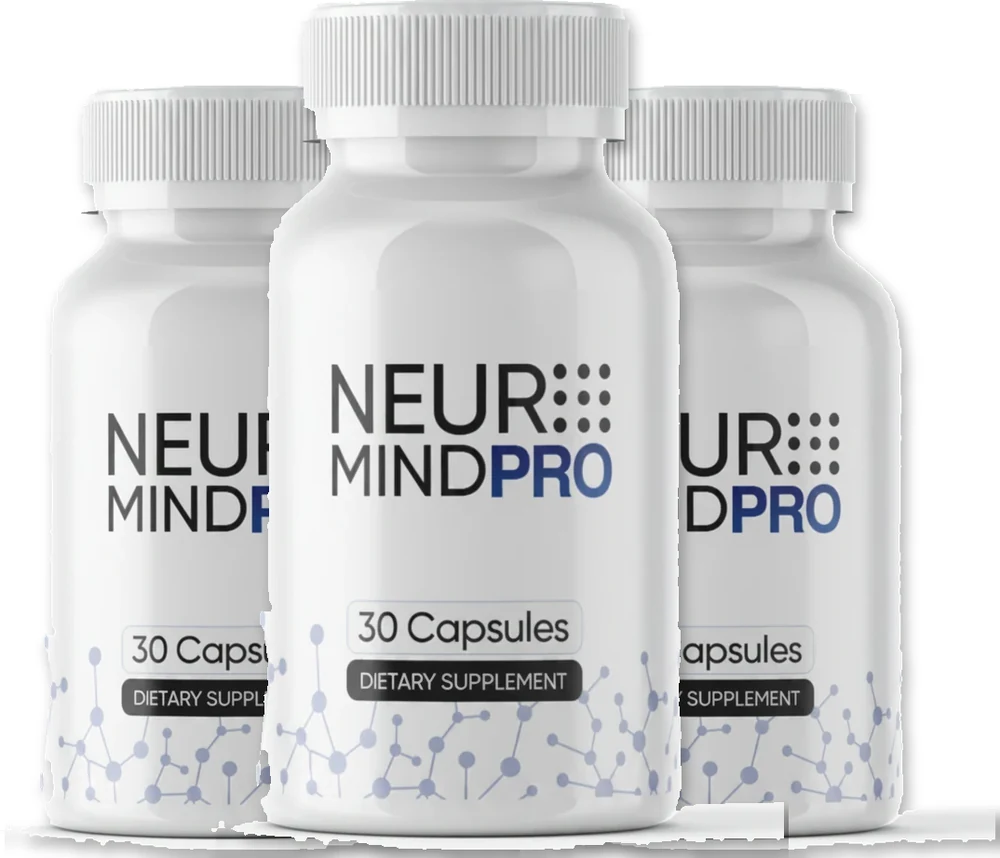
Neuromind Pro Official Website › Choosing A Focus Supplement
Choosing A Focus SupplementChoosing A Focus Supplement
Seven checks decide whether a focus label can be read at all: printed amounts, a blend total, the plant part and standardisation, honest serving arithmetic, a caffeine figure, a refund route with an address on it, and a claim that stays inside what a supplement may say. Neuromind Pro passes four of the seven, half-passes one and fails two.
A checklist a seller's own product passes seven times out of seven is an advertisement with numbers on it.
Why a proprietary blend hides the number that matters
One total, several ingredients, and the difference between a ceiling and a dose.
A proprietary blend is a legal way of listing several ingredients under one shared total. The list is real and the total is real. What goes missing is the split between them, and the split is the entire question.
Work through the arithmetic once and it applies to every blend you will ever read. Seven ingredients sharing 151 mg means no single one exceeds 151 mg, and six must sit below whatever the largest one takes. If an ingredient's trials used 300 mg a day, the blend cannot contain a trial dose of it even if that ingredient took the whole line and the other six took nothing.
So a blend total is not useless. It is a ceiling, and a ceiling is a real piece of information: it can rule an ingredient out, which is often all you need. What it cannot do is rule one in, and the makers who use blends know that the two look similar on a shelf.
The stated reason for a blend is recipe protection. The practical effect is that a product can carry an impressive ingredient list at amounts nobody outside the factory can check, and that the cheapest ingredients can be the largest share without anything on the label being untrue.
One kind of ingredient escapes this, and it escapes in a way worth watching. Anything active in microgram amounts, huperzine-A being the common example, fits inside any blend at its full researched dose. Its presence cannot be ruled out by arithmetic, which is exactly why its absence from the numbers deserves more attention than a botanical's.
The seven checks, and what each one is really asking
Seven questions, in the order that makes the later ones quicker.
1. Is every active printed with its own amount?
The first and most important. A label that gives a figure for every row can be compared with published research; one that does not, cannot. Blends are legal and common, so this check is not a fraud detector. It is a readability test, and a label that fails it has decided you do not need the number.
2. If there is a blend, is a total printed at all?
There is a meaningful gap between a blend with a milligram figure and a blend with none. The first gives you a ceiling to reason with. The second gives you an ingredient list and nothing else, and it is more common than people expect.
3. Is the plant part named, and the extract standardised?
Root, leaf, whole herb and whole plant are different materials with different chemistry, and 300 mg of one is not 300 mg of another. An extract should name its marker compound, as bacopa standardised to bacosides does. Without both, a botanical figure cannot be lined up against the trials that produced the result.
4. Does the serving arithmetic hold up?
Serving size, servings per container, and capsules in the bottle. Two capsules a serving in a sixty-capsule bottle is a month, not two, and a per-bottle price that looks competitive can stop looking that way once the arithmetic is done. A printed panel gives you all three figures in one place.
5. Is the caffeine amount given as a number?
Caffeine is the ingredient in this category with the most dependable evidence and the clearest dose-response, so it is the one figure with the most practical value. It also stacks with everything else you drink, against a usual ceiling of 400 mg a day for healthy adults. Naming the source without the number leaves you unable to do that sum.
6. Is there a refund route with a window, an address and a phone number?
A guarantee is only as good as the mechanics printed beside it. Look for the length of the window, what starts the clock, whether a return authorisation is required, the address bottles go back to, and who pays the postage, the way a refund policy should set them out. A money-back promise with none of that attached is a slogan.
7. Does the claim stay inside what a supplement may say?
A dietary supplement may make structure and function claims and may not claim to treat, prevent or cure a disease. A label promising to reverse memory loss has told you something important about the company before you reach the panel. The reviews of this category found marketing regularly outrunning the evidence, which is why this check earns its place.
Scoring Neuromind Pro against the same seven checks
Four passes, one half-pass and two fails, with the reasoning shown.
Running the checklist over the product this website sells is the only way to show it is a checklist. Here is the panel, check by check, with the result first and the reasoning beside it.
| Check | Result | What the label shows |
|---|---|---|
| 1. Every active printed with its own amount | Fail | Three vitamins are printed in full: thiamine 6 mg, vitamin B6 8.5 mg, vitamin B12 24 mcg. The remaining 7 share one 151 mg line. |
| 2. A blend total printed | Pass | 151 mg is on the panel, which is a ceiling you can reason with. |
| 3. Plant part and standardisation named | Partial | Bacopa is whole plant extract at 20% bacosides A&B and Huperzia serrata is whole herb at 1% huperzine-A. Rhodiola is named as root with no marker compound. |
| 4. Serving arithmetic holds up | Pass | One capsule a serving, 30 servings, 30 capsules. A bottle is a month and the label says so. |
| 5. Caffeine given as a number | Fail | The source is named as green coffee bean. The amount sits inside the blend line. |
| 6. Refund route with a window, an address and a phone number | Pass | 60 days from purchase, a return authorisation from +1 (877) 257-0710 first, bottles back to 461 Fifth Avenue, Floor 8, New York, NY 10017, USA, buyer pays the postage. |
| 7. Claim inside what a supplement may say | Pass | One structure and function sentence: designed to support cognitive function and mental clarity. No disease claim anywhere on the panel. |
Read from the printed label artwork rather than from the seller's summary copy. Four passes, one partial, two fails.
The two it fails, and why they matter more than the five it passes
Two fails, one cause, and what the arithmetic makes of it.
Both failures come from the same line on the panel. 7 ingredients share 151 mg, so no individual amount can be verified and the caffeine figure goes with them.
Put that ceiling beside the doses from the ingredient guide and the consequence is arithmetic rather than opinion. Bacopa's trials used 300 mg a day for twelve weeks, which is twice the whole blend. Rhodiola's used 400 to 576 mg. Theacrine's used 125 to 400 mg. Theobromine did anything at all only in the hundreds of milligrams. Tyrosine's trials are in grams. Caffeine's alertness effects are strongest above 200 mg. Six of the seven have researched doses that cannot fit inside the total even alone.
The seventh is huperzine-A, whose trials run at 0.4 to 0.8 mg a day. That fits easily, which makes it the one ingredient here that could genuinely be present at a studied amount. It is also the only one that works by inhibiting an enzyme, in the same class as prescription dementia drugs, and Cochrane judged its evidence inadequate for a recommendation while noting it is pharmacologically active in microgram quantities. So the ingredient with the strongest reason to want a figure is inside the part of the panel that has none.
That is the honest shape of this label, and it is why the passes are worth something rather than nothing. A real blend total, printed vitamin amounts, standardisation on two botanicals, honest serving arithmetic and a refund route with an address on it are all more than many labels in this aisle manage. A buyer who wants milligram certainty should buy single-ingredient products, and this checklist says so.
Running the same seven checks on the alternatives
The same seven checks against the two things most people buy instead.
| A single-ingredient bacopa capsule | Caffeine plus L-theanine | A broad focus blend | |
|---|---|---|---|
| Amounts printed | Yes, one row | Yes, both rows | Rarely for every row |
| Standardisation stated | Usually, to bacosides | Not applicable | Sometimes, on one or two rows |
| Caffeine figure | Not applicable | Printed to the milligram | Often inside a blend |
| Time to judge | 12 weeks minimum | Same day | Set by the slowest ingredient |
| What you give up | Breadth. One mechanism only. | Any botanical component at all. | Certainty about the amounts. |
A comparison of label formats rather than of brands. All three are things you can buy from many sellers.
The pattern is consistent and it is worth stating as a rule. The fewer ingredients a product has, the better it tends to score on this checklist, because there is less reason to hide anything and more room for each amount. Breadth and verifiability pull against each other, and a product cannot fully have both.
Which side to take is a genuine preference rather than a right answer. Someone who wants to know exactly what they are taking should buy fewer things at printed amounts. Someone who wants a single capsule covering several mechanisms is accepting a blend line, and should at least know that is the trade being made.
Four things that look like checks and are not
Four signals that feel like evidence and carry none.
An FDA-registered facility badge
Facility registration is an administrative listing of a factory. It is not an inspection result, not approval of what is made there, and not a statement about the formula. No dietary supplement is FDA approved, so a site claiming one is has told you something useful about itself.
A star rating supplied by the seller
An average out of five, printed by the company selling the product, is marketing copy rather than audited data. It may well be accurate. It is not evidence that a formula works, and it belongs nowhere in a decision about amounts.
“Doctor formulated” with no doctor named
A seal naming nobody cannot be checked, so it carries no information. A named clinician with a stated role is rarer than the badge suggests.
Botanical props in the photography
Product photography routinely shows leaves, berries and mushrooms that never appear on the panel. It is decoration. The Supplement Facts panel is the only list with legal meaning, and the two disagree more often than you would think.
What a label check cannot tell you
What a transparent label still does not buy you.
This checklist measures one thing: whether a label can be read and held against published research. That is necessary and it is nowhere near sufficient, and a guide that pretended otherwise would be making the same mistake as the labels it criticises.
A perfectly transparent label can print a researched dose of an ingredient whose research is weak. The reviews of this category found the evidence inconsistent and often methodologically flawed across the board, and a review of 103 memory supplements sold in United States pharmacies found little that was firmly established. Transparency tells you what you are taking. It does not promise the thing is worth taking.
Two more limits are worth naming. A label cannot tell you whether the capsule contains what it says, which is what independent testing is for and what a lot number alone does not establish. And it cannot tell you whether an ingredient interacts with something you already take, which depends on your prescriptions rather than on the panel.
Used within those limits the seven checks do a specific job well. They let you compare two bottles honestly, rule out the products that have decided you do not need the numbers, and know which questions are still open once you have bought.
Sources cited in this checklist
The papers behind the dose figures and the category claims above.
- EFSA Panel on Nutrition, Novel Foods and Food Allergens (NDA); Turck D, Bohn T, Castenmiller J, et al. Scientific opinion on the tolerable upper intake level for vitamin B6. EFSA J. 2023;21(5):e08006. PMID 37207271. https://pubmed.ncbi.nlm.nih.gov/37207271/
- McLellan TM, Caldwell JA, Lieberman HR. A review of caffeine's effects on cognitive, physical and occupational performance. Neurosci Biobehav Rev. 2016;71:294-312. PMID 27612937. https://pubmed.ncbi.nlm.nih.gov/27612937/
- Wikoff D, Welsh BT, Henderson R, et al. Systematic review of the potential adverse effects of caffeine consumption in healthy adults, pregnant women, adolescents, and children. Food Chem Toxicol. 2017;109(Pt 1):585-648. PMID 28438661. https://pubmed.ncbi.nlm.nih.gov/28438661/
- Kongkeaw C, Dilokthornsakul P, Thanarangsarit P, et al. Meta-analysis of randomized controlled trials on cognitive effects of Bacopa monnieri extract. J Ethnopharmacol. 2014;151(1):528-35. PMID 24252493. https://pubmed.ncbi.nlm.nih.gov/24252493/
- Calabrese C, Gregory WL, Leo M, et al. Effects of a standardized Bacopa monnieri extract on cognitive performance, anxiety, and depression in the elderly: a randomized, double-blind, placebo-controlled trial. J Altern Complement Med. 2008;14(6):707-13. PMID 18611150. https://pubmed.ncbi.nlm.nih.gov/18611150/
- Hung SK, Perry R, Ernst E. The effectiveness and efficacy of Rhodiola rosea L.: a systematic review of randomized clinical trials. Phytomedicine. 2011;18(4):235-44. PMID 21036578. https://pubmed.ncbi.nlm.nih.gov/21036578/
- Li J, Wu HM, Zhou RL, et al. Huperzine A for Alzheimer's disease. Cochrane Database Syst Rev. 2008;(2):CD005592. PMID 18425924. https://pubmed.ncbi.nlm.nih.gov/18425924/
- Crawford C, Boyd C, Deuster PA. Dietary Supplement Ingredients for Optimizing Cognitive Performance Among Healthy Adults: A Systematic Review. J Altern Complement Med. 2021;27(11):940-958. PMID 34370563. https://pubmed.ncbi.nlm.nih.gov/34370563/
- Hersant H, He S, Maliha P, et al. Over the Counter Supplements for Memory: A Review of Available Evidence. CNS Drugs. 2023;37(9):797-817. PMID 37603263. https://pubmed.ncbi.nlm.nih.gov/37603263/
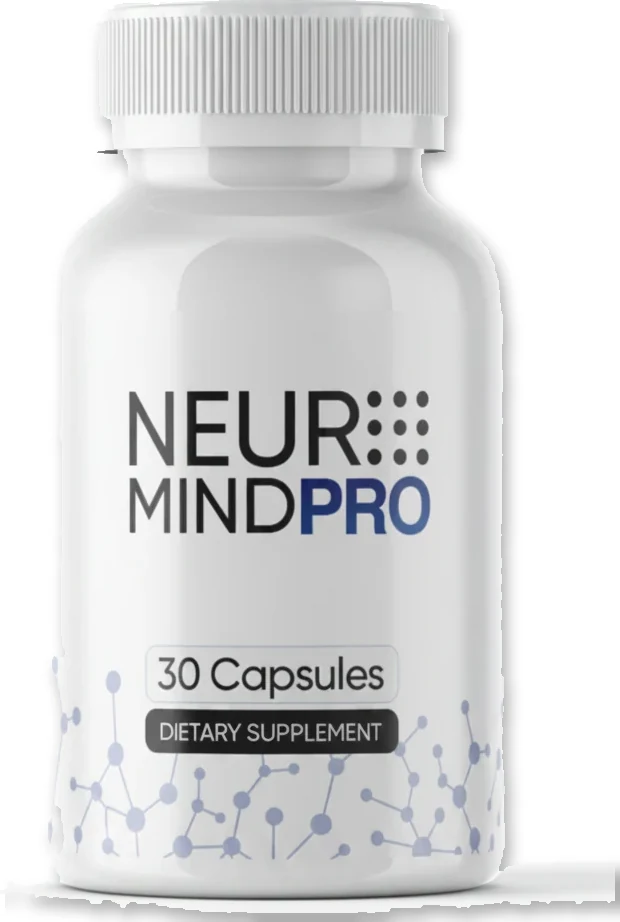
Order Neuromind Pro on the official website
Four passes, one partial and two fails on the checklist above. If that trade suits you, packs run 60 days of guarantee from the date of purchase and the panel is published in full on this website.
Packs from $158 · six bottles for $294 · 60-day money-back guarantee
Order Neuromind Pro On The Official WebsiteOne capsule a day · 30 per bottle · lot NEU-26/GE-6907