Neuromind Pro Official Website › Blog › Daily Value
500% Of Daily Value Is Not Five Times The Effect
Three rows on this panel carry percentages in the hundreds, and they are the most honest part of the label. They are also the part most likely to be read as a promise about how well something works.
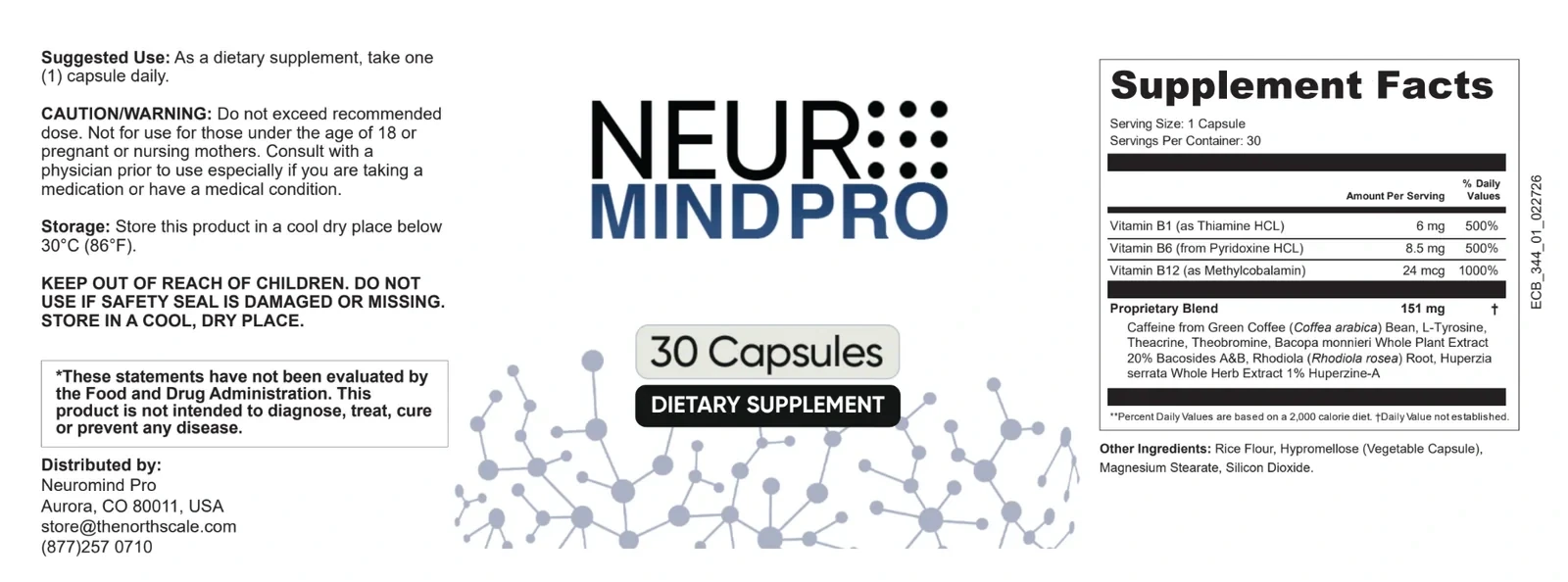
- A percentage of Daily Value is a ratio against a labelling reference intake, not a measure of effect.
- 6 mg of thiamine at 500% implies a Daily Value of 1.2 mg; 24 mcg of B12 at 1000% implies 2.4 mcg.
- The evidence for B vitamins and cognition runs almost entirely through deficiency.
- A meta-analysis of 6,276 participants found no effect of B12 on any cognitive subdomain in people who were not deficient.
- Printing the percentages is still the right thing for a label to do, and it is what the blend line cannot do.
What a percentage is measured against
The % Daily Value column on a United States Supplement Facts panel compares the amount in one serving against a single reference intake chosen for labelling. One number, one population, one purpose: letting two products be compared on the same scale.
That purpose is worth respecting and worth limiting. The reference intake is not a dose anybody prescribed, it is not the amount at which a compound was studied, and it carries nothing about where a safe ceiling sits. It answers a comparison question and no other.
So a percentage in the hundreds tells you a label carries several reference intakes in one serving. Whether that is generous, pointless or worth watching depends entirely on which vitamin the row is describing.
Three rows, three reference intakes
Working backwards from the printed amounts gives the reference figures directly, and putting the blend row in the same table shows what the column can and cannot do.
| Panel row | Amount | % Daily Value | So the Daily Value is | What the percent tells you |
|---|---|---|---|---|
| Vitamin B1 (thiamine HCl) | 6 mg | 500% | 1.2 mg | Five adult reference intakes in one capsule |
| Vitamin B6 (pyridoxine HCl) | 8.5 mg | 500% | 1.7 mg | Five reference intakes, against a 12 mg upper level |
| Vitamin B12 (methylcobalamin) | 24 mcg | 1000% | 2.4 mcg | Ten reference intakes, in micrograms |
| Proprietary Blend | 151 mg | † | No reference intake exists | The dagger means no Daily Value has been established |
The fourth column is arithmetic on the first two. The dagger on the blend row is standard labelling for an ingredient with no established Daily Value, and it is not a footnote about the amount.
Two things are visible at once. The vitamin rows are fully specified: an amount, a percentage, and a reference you can derive. The blend row is a single total for seven ingredients, and the dagger is there because no Daily Value exists for caffeine, theacrine, bacopa or any of the rest.
That contrast is the most useful thing on this panel. The full reproduction puts them side by side, and the difference between the two halves is a difference in how much a reader can check.
Why five times the reference is not five times anything
The instinctive reading is a dose-response one: if 100% does something, 500% does five times as much. Nothing about how these vitamins work supports that, and nothing about how the percentage is constructed implies it.
A reference intake is set around the amount needed to avoid a shortfall in almost everyone. Once a shortfall is covered, additional intake is not doing the same job harder. It is doing a job that has already been done.
What the percentage would need to be, to mean what people read into it
For a percentage to predict an effect, the underlying figure would have to be an effective dose from a trial rather than a population reference intake. Those are different quantities arrived at by different methods, and for most vitamins they are not even close.
The blend line on this same panel is the clearest illustration. Huperzine-A has been studied at 0.4 to 0.8 mg a day and bacopa at 300 mg a day, and neither figure is a Daily Value or could be expressed as one. Doses come from trials. Percentages come from labelling rules.
Four things a Daily Value is not, and all four get read into it anyway:
- A dose anyone was prescribed, or the amount used in any trial.
- A maximum, or anything related to one. Upper intake levels are set separately.
- A statement that more of the vitamin produces more of the effect.
- A figure that applies to the blend row at all, which is why that row carries a dagger.
Where the evidence is genuinely strong
None of this makes B vitamins unimportant. It makes the evidence conditional, and the condition is whether the person was short to begin with.
A 2025 systematic review of thiamine and cognition in alcohol use disorder found lower thiamine tracking with worse attention and memory, and supplementation helping in that population. That is a real and well-documented effect in a group with a real shortfall.
The same shape holds for B12. Deficiency genuinely damages thinking, it is more common than people assume over the age of fifty, and it is worth testing for on a vegan diet or on long-term metformin or acid-suppressing medication. Correcting it is not a marginal intervention.
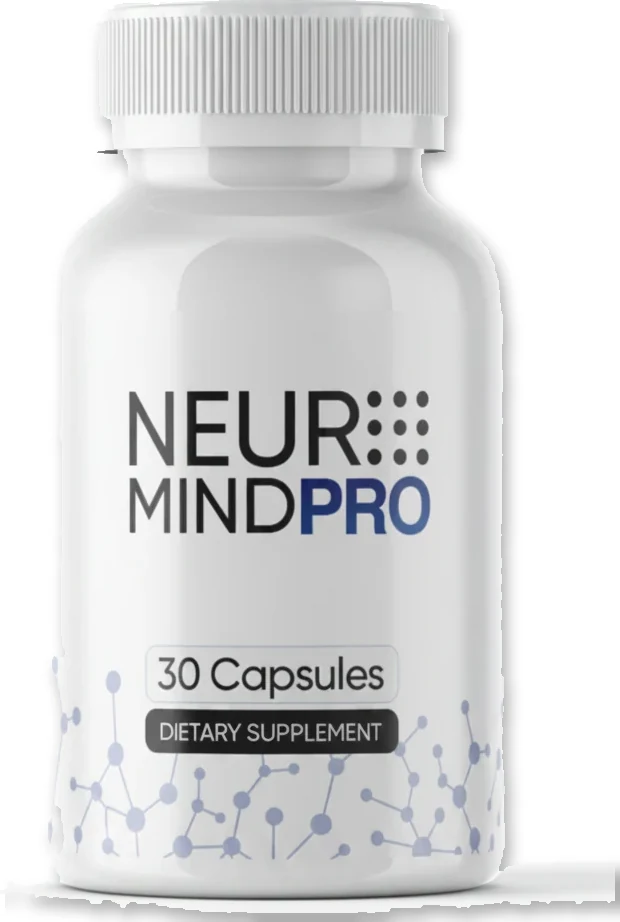
What the Neuromind Pro panel prints, in full
Three B vitamins with their amounts and percentages, a 151 mg blend of seven, one capsule a day and 60 days from purchase to decide.
Packs from $158 · six bottles for $294 · 60-day money-back guarantee
Order Neuromind Pro On The Official WebsiteOne capsule a day · 30 per bottle · lot NEU-26/GE-6907
What the trials found in people who were not short
This is the part that gets left out of the marketing, and it is not ambiguous.
A systematic review and meta-analysis of 6,276 participants found no effect of vitamin B12 supplementation on any cognitive subdomain in people without deficiency. Not a small effect. No effect on the subdomains measured.
A meta-analysis in community-dwelling older adults looked at B12, B6 and folate together and reached a similarly restrained conclusion, and a 2025 meta-analysis of B vitamins as a group put the average benefit on global cognition in older adults at very small. For vitamin B6 specifically, the Cochrane review did not find a benefit in people who were not deficient.
Four separate bodies of evidence, one consistent answer. If your levels are already normal, these three rows are insurance rather than an effect, and saying so is not a criticism of the product. It is what the research says about the nutrients.
Two readers, one panel
The same three rows do different work for different people, and sorting which one you are is more useful than any argument about percentages.
| Which reader you are | What these three rows plausibly do | How you would find out |
|---|---|---|
| Short of B12, which is common over 50, on a vegan diet, or on long-term metformin or acid suppression | Correct a real shortfall, and the cognitive evidence for that is the strongest in this whole area | A blood test arranged by a clinician |
| Short of thiamine, which is mostly seen with heavy alcohol use or poor intake | Correct a real shortfall, with attention and memory among the outcomes studied | A clinician, because the context matters more than the number |
| Replete on all three, which most people eating an ordinary mixed diet are | Cover you against a future shortfall, and nothing measurable beyond that | The trials below already answer it: flat results |
| Unsure, which is most people | Unknown, and that is the honest answer | Ask before buying rather than after the third bottle |
A way of sorting the question rather than clinical advice. Deficiency is a diagnosis, not something a panel or an afternoon can tell you.
The fourth row is the honest one for most buyers. Not knowing is the ordinary state, and it is the reason these vitamins are sold as cover rather than as an effect.
How to find out which reader you are
None of this needs a specialist, and most of it is a conversation rather than a test.
- Ask a clinician for a B12 level if you are over fifty, eat no animal products, or have been on metformin or an acid-suppressing drug for a long time.
- Mention thiamine if alcohol intake has been heavy or food intake has been poor.
- Bring the actual panel rather than the product name. 8.5 mg means something; 500% means something only once you know the vitamin.
- Add up everything else you take first, because a second high-percentage product changes the answer more than this one does.
- If you have numbness or tingling in your hands or feet, raise that specifically. It is the effect that sets the upper limit on vitamin B6.
The B6 row is the one with a ceiling close enough to matter, and it has a full article of its own.
Why the percentages are still worth printing
It would be easy to finish by treating the percentage column as noise. That would be the wrong conclusion, and it would miss what the top half of this panel does well.
Three rows carry an amount, a unit and a percentage. Anyone can check them against another bottle, add them into a weekly total, or hold the page against the label that arrives. The 151 mg blend line, covering seven more ingredients, allows none of that: it gives a ceiling and leaves the rest to arithmetic.
A label that printed nothing would be worse than one whose percentages are easy to misread. The right response is to convert them into the units that mean something and carry on reading. The ingredients page does that for all ten rows, and the reviews page applies the same treatment to the distributor's own figures.
Neuromind Pro is a dietary supplement for healthy adults 18 and over. It is not a treatment for any condition, including vitamin deficiency, and it is not FDA-approved. A suspected deficiency is diagnosed and corrected by a clinician, not chosen off a panel.
References
- Teixeira J, Pereira I, Castanho M, et al. What is the impact of thiamine deficiency on cognitive function in patients with alcohol use disorder? - A systematic review. Eur J Intern Med. 2025;134:59-65. PMID 39818490. https://pubmed.ncbi.nlm.nih.gov/39818490/
- Malouf R, Grimley Evans J. The effect of vitamin B6 on cognition. Cochrane Database Syst Rev. 2003;(4):CD004393. PMID 14584010. https://pubmed.ncbi.nlm.nih.gov/14584010/
- Markun S, Gravestock I, Jager L, et al. Effects of Vitamin B12 Supplementation on Cognitive Function, Depressive Symptoms, and Fatigue: A Systematic Review, Meta-Analysis, and Meta-Regression. Nutrients. 2021;13(3). PMID 33809274. https://pubmed.ncbi.nlm.nih.gov/33809274/
- Zhang C, Luo J, Yuan C, et al. Vitamin B12, B6, or Folate and Cognitive Function in Community-Dwelling Older Adults: A Systematic Review and Meta-Analysis. J Alzheimers Dis. 2020;77(2):781-794. PMID 32773392. https://pubmed.ncbi.nlm.nih.gov/32773392/
- Berg J, Grant R, Siervo M, et al. Efficacy of B Vitamin Supplementation on Global Cognitive Function in Older Adults: A Systematic Review and Meta-analysis. Nutr Rev. 2025;83(12):2256-2267. PMID 40966571. https://pubmed.ncbi.nlm.nih.gov/40966571/