Neuromind Pro Official Website › Blog › Vitamin B6 At 8.5 mg
Vitamin B6 At 8.5 mg: Reading A Percent Against An Upper Limit
Five hundred per cent sounds like a lot until you notice what it is five hundred per cent of. The number worth carrying around is not the percentage, and it is not printed on any Supplement Facts panel.
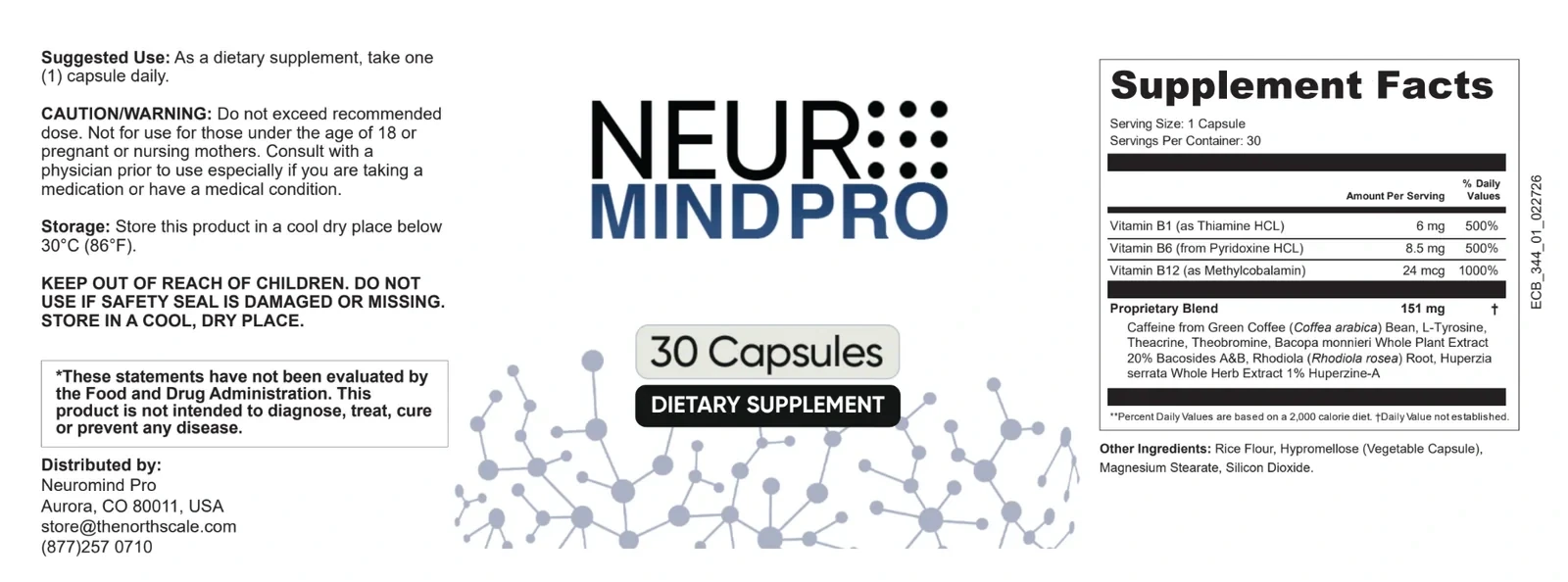
- 8.5 mg of vitamin B6 is 500% of the Daily Value, which means the Daily Value is 1.7 mg.
- EFSA set the adult tolerable upper intake level at 12 mg a day in 2023.
- One capsule leaves about 3.5 mg of headroom before that limit, from every other source combined.
- The effect that sets the limit is a sensory peripheral neuropathy, and it has been reported from ordinary daily multivitamin use.
- One capsule on its own is not the question. A capsule plus a B-complex plus a fortified drink is.
Two numbers on one row
The vitamin B6 line on this panel reads: Vitamin B6 (from Pyridoxine HCL), 8.5 mg, 500%. Two numbers describing the same quantity, one of which is useful for comparing against other products and one of which is useful for comparing against a safety threshold.
Most people read the percentage, because it is the one that looks like a judgement. It is not. A percentage of Daily Value is a ratio against a reference intake for labelling, and it carries no information at all about where a safe ceiling sits.
The milligrams are the number to work with, and the reason is that the ceiling for this particular vitamin is set in milligrams by a body that does not use Daily Values.
What the 500% is a percentage of
The arithmetic goes backwards cleanly. If 8.5 mg is 500%, then 100% is 1.7 mg, and 1.7 mg is the Daily Value for vitamin B6 for adults on a United States panel.
A Daily Value is a single reference figure chosen so that one number can serve a whole population on a label. It is not a target, not a dose and not a maximum. It exists so that two products can be compared on the same scale, which is a genuinely useful thing for a percentage to do and a very limited one.
Why a percentage cannot tell you about safety
Different vitamins have wildly different distances between their reference intake and their upper limit. For thiamine there is no established upper level at all, so 500% is not a safety question. For vitamin B6 the distance is about sevenfold, which is narrow enough that a percentage in the hundreds is worth converting back into milligrams before comparing it with anything else in the cupboard.
That is the whole reason this row gets an article and the thiamine row does not. Same percentage, different meaning, because the underlying vitamins behave differently. MedlinePlus carries the general background on what B6 is and what it does.
The number nobody prints: 12 mg
EFSA's 2023 scientific opinion set the tolerable upper intake level for vitamin B6 in adults at 12 mg a day. A tolerable upper intake level is the highest ongoing daily amount judged unlikely to cause harm in the general population, and it is deliberately conservative.
The effect that decides the number is not vague. High pyridoxine intake sustained over time is associated with a sensory peripheral neuropathy, typically starting as numbness or tingling in the hands and feet. A review of the mechanisms works through how a water-soluble vitamin ends up doing that, which is a question worth asking because most people assume water-soluble means unlimited.
It is not a theoretical concern from extreme doses in a laboratory. A case report published in 2023 described B6 toxicity arising from daily multivitamin use, which is about as ordinary a route as exists.
The four figures that decide this row
All of it fits in one small table, and the last row is the one the panel leaves to you.
| The number | What it is | Where it comes from |
|---|---|---|
| 1.7 mg | The Daily Value for vitamin B6 in adults | The reference intake a percentage on a US panel is measured against |
| 8.5 mg | What one capsule carries | Printed on the Supplement Facts panel |
| 500% | 8.5 divided by 1.7 | Printed beside it, and derived from the two above |
| 12 mg | EFSA's tolerable upper intake level for adults | Set in 2023, with peripheral neuropathy as the deciding effect |
| 3.5 mg | What is left between one capsule and that limit | Arithmetic, and the number the panel does not do for you |
The Daily Value is a labelling reference intake. The upper level is a separate figure set by a different body for a different purpose, and no US panel prints it.
Three and a half milligrams of headroom is not alarming and it is not generous. It is enough to absorb a standard multivitamin and not enough to absorb a second high-dose B product. The ingredients page prints the studied amount beside every other row on this panel for the same reason.
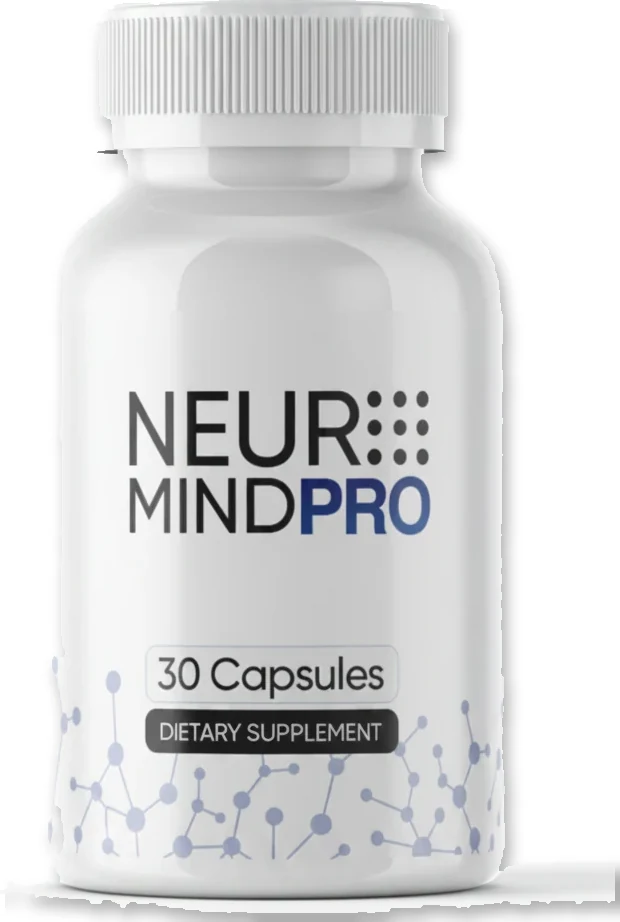
The Neuromind Pro panel, printed in full
Three B vitamins with their amounts, a 151 mg blend of seven, one capsule a day and 60 days from purchase to change your mind.
Packs from $158 · six bottles for $294 · 60-day money-back guarantee
Order Neuromind Pro On The Official WebsiteOne capsule a day · 30 per bottle · lot NEU-26/GE-6907
The stacking problem, worked through
Nobody takes one product. The realistic question is what a week looks like when a capsule like this sits alongside whatever else is already on the shelf.
| What you take in a day | B6 it contributes | Running total | Against the 12 mg level |
|---|---|---|---|
| One capsule of this | 8.5 mg | 8.5 mg | Comfortably inside |
| Plus a multivitamin at 100% of Daily Value | 1.7 mg | 10.2 mg | Still inside |
| Plus a fortified drink at 100% of Daily Value | 1.7 mg | 11.9 mg | A tenth of a milligram under |
| Plus a B-complex at 500% of Daily Value | 8.5 mg | 20.4 mg | Well over |
| This capsule plus one other 500% product | 17 mg | 17 mg | Over on two products |
Arithmetic on Daily Value percentages rather than measurements of specific brands. The point is how quickly ordinary products add up, not that any one of them is a problem on its own.
The pattern is the point. Each individual product on that list is unremarkable, and the combinations are what move the total. Two products at 500% of Daily Value take you to 17 mg without either of them looking excessive on its own panel.
This is also why the percentage is the wrong unit for the job. Adding percentages feels like adding small numbers, and adding milligrams feels like what it is.
Where else B6 turns up in an ordinary week
Worth a look through the cupboard rather than a worry. B6 is added to more things than most people expect:
- A daily multivitamin, almost always, and often at several hundred per cent.
- A separate B-complex, which is where the largest single amounts usually sit.
- Energy drinks and energy shots, most of which are fortified with B vitamins.
- Pre-workout powders and some protein blends.
- Fortified breakfast cereals and some plant milks.
- Any second nootropic or focus product, which will often carry a B complex of its own.
Food is not the concern. B6 from meat, fish, potatoes and bananas has never been the source of the neuropathy described in the literature, and the upper level was set with supplements and fortification in mind. Anyone running the same total across a longer supply will find the pack sizes on the pricing page.
What B6 does for someone who is not short
The mechanism is real: vitamin B6 is a cofactor for the enzymes that build several neurotransmitters, which is exactly why it appears on a panel like this one.
The trial evidence for adding it to someone who already has enough is another matter. The Cochrane review of vitamin B6 and cognition did not find a benefit in people who were not deficient. That is a flat result, and it is the same shape as the results for the other two vitamins on this panel.
So the honest expectation for this row is cover rather than effect. If you were short, 8.5 mg will fix that comfortably. If you were not, the sensible thing to do with the number is add it to the rest of your week. The reasoning for all three vitamin rows is in the Daily Value article.
Who should add this up before the first capsule
Most healthy adults taking one capsule a day and nothing else have no arithmetic to do here. The people who do are specific.
Neuromind Pro is a dietary supplement for healthy adults 18 and over. It is not a drug and not FDA-approved. Vitamin B6 has a 12 mg adult upper intake level set on peripheral neuropathy, and one capsule is 8.5 mg of it, so if you already take a B-complex, a high-dose multivitamin or a second fortified product — or if you have numbness or tingling in your hands or feet — take the panel to a clinician before adding this one.
- Anyone taking a B-complex, which is the single most common source of a large B6 amount.
- Anyone taking a second focus or nootropic product, because B vitamins are standard in the category.
- Anyone drinking fortified energy products daily rather than occasionally.
- Anyone with existing numbness, tingling or burning in the hands or feet, whatever the suspected cause.
- Anyone who has been on a high-dose B6 product for months and has never added up the total.
What would make this row easier to read
Three small changes, none of which requires a reformulation.
Print the milligrams first and the percentage second, which is the order a reader needs them in. Put the upper intake level in the small print beside it, the way some European labels carry advisory maximums. And say plainly that the percentage is a labelling reference rather than a target.
Until any of that happens, the workaround is the one this article has used throughout: convert every percentage back into milligrams, write the totals down, and compare like with like. The full panel is reproduced row by row, and the side effects page gathers the stacking question alongside the others.
References
- EFSA Panel on Nutrition, Novel Foods and Food Allergens (NDA); Turck D, Bohn T, Castenmiller J, et al. Scientific opinion on the tolerable upper intake level for vitamin B6. EFSA J. 2023;21(5):e08006. PMID 37207271. https://pubmed.ncbi.nlm.nih.gov/37207271/
- Hadtstein F, Vrolijk M. Vitamin B-6-Induced Neuropathy: Exploring the Mechanisms of Pyridoxine Toxicity. Adv Nutr. 2021;12(5):1911-1929. PMID 33912895. https://pubmed.ncbi.nlm.nih.gov/33912895/
- Malouf R, Grimley Evans J. The effect of vitamin B6 on cognition. Cochrane Database Syst Rev. 2003;(4):CD004393. PMID 14584010. https://pubmed.ncbi.nlm.nih.gov/14584010/
- Paluszny A, Qiu S. Vitamin B6 Toxicity Secondary to Daily Multivitamin Use: A Case Report. Cureus. 2023;15(11):e48792. PMID 38098895. https://pubmed.ncbi.nlm.nih.gov/38098895/
- Vitamin B6. MedlinePlus Medical Encyclopedia. U.S. National Library of Medicine. https://medlineplus.gov/ency/article/002402.htm